Let members sign for it.
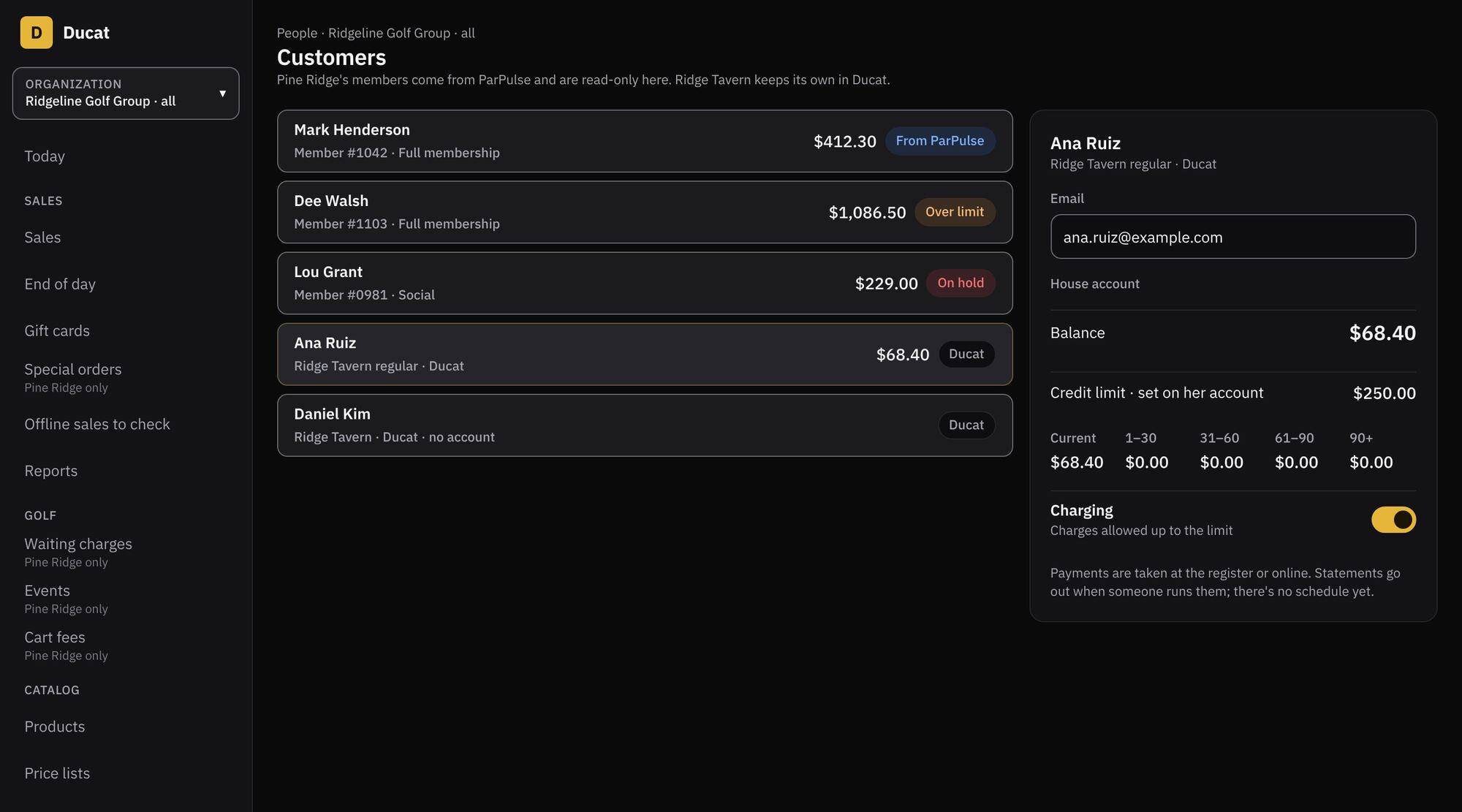
A house account lets a member or regular charge to their name. Each account has a limit and payment terms, and statements and aging show who owes what.
What it does today
5 shipped-
House accounts with limits and an allowance over
Each account can allow a set amount over its limit.
-
Payment terms
Each charge is aged from its date and the account’s terms.
-
Statements
Ducat runs a period’s statements, for one account or every account; sending them and a page to run them are still being built.
-
Aging
30, 60 and 90 days past due, worked out and read through the partner API; the page is planned.
-
Member lookup offline
How it works
-
1
Limits and terms
Each account has its own credit limit and payment terms. Customers come from your directory or a spreadsheet, each with a member number that’s never reused.
-
2
Charge at the register
A house account is a payment type, up to its limit and any allowance over it. Past that, a manager approves, which waits on adding your staff.
-
3
Balance forward
Statements carry the balance forward, and aging shows how far past due each charge is, from its date and the account’s payment terms.
-
4
Run statements
Ducat runs a period’s statements; sending them and a page to run them are being built. Aging at 30, 60 and 90 days past due is worked out, with no page for it yet.
Works with
Questions we hear
What if a member goes over their limit?
Each account can allow a set amount over its limit. Past that, a manager approves, which waits on adding your staff.
Do members get statements?
Ducat runs a period’s statements, with the charges and the balance forward; sending them and a page to run them are being built.
Can a member be removed?
Ducat can erase a member’s details and keep the member number, so it’s never given to someone else. Asking for it from the back office is still being built.
10 more items are being built or planned. The roadmap shows which. See the roadmap
See it with your own prices
We’ll email you when Ducat opens to new businesses.